Addressing Your Torn Ligament
A torn anterior cruciate ligament (ACL) affects knee stability and can sideline activity. One of the more severe, long-term knee injuries, as many as 200,000 ACL tears occur in the US in a given year. The procedure almost always requires surgery in the form of an ACL reconstruction. This procedure involves removing the damaged ligament and placing a new tendon from a donor or graft. Traditional surgery often means long recovery times. Minimally invasive surgery (MIS) seeks to improve outcomes while significantly reducing downtime. Understanding the many benefits of MIS can provide anyone with a torn ACL with more peace of mind and a shorter timeline for returning to everyday activities.
A deeper look at ACL tears
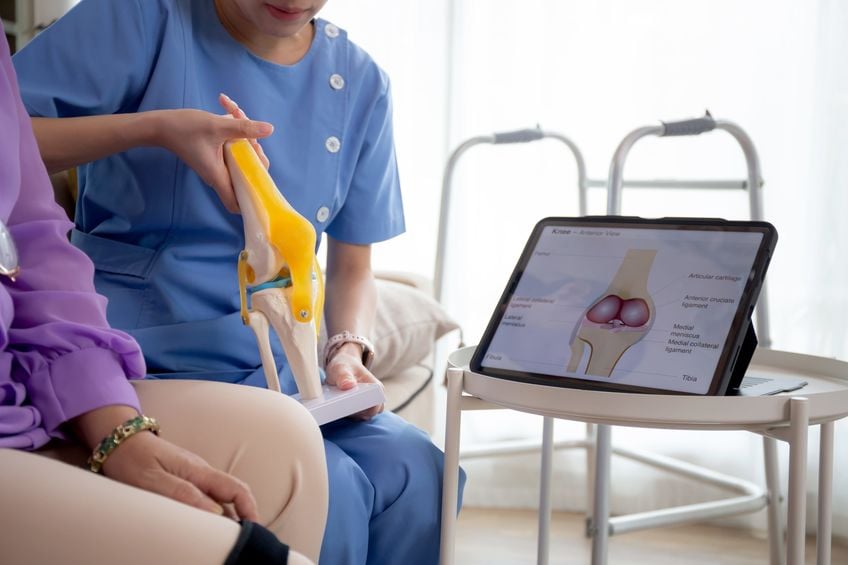
The ACL is a critical ligament of the knee. The ligament connects the shin and thigh bones, along with the posterior cruciate ligament (PCL), forming a cross. The ACL is essential for knee stability, change of direction, and preventing the knee from moving too far forward. A torn ACL is common when the knee is subjected to unnatural forces such as a sudden twist, awkward landing, or quick pivot. A collision or blow to the knee can also cause ACL tears. The injury is especially common in contact sports, like basketball, football, and soccer. Patients can suffer a partial tear, where some of the fibers of the ligament are still intact. A complete tear, known as a grade 3 tear, occurs when the ligament is fully ruptured or removed from the bone. ACL tears are often accompanied by damage to the medial collateral ligament (MCL) or meniscus. Statistics also show women, especially those in sports, are more likely to suffer ACL tears.
A minimally invasive approach
Most ACL tears require surgery, known as ACL reconstruction. The surgery is especially vital if the patient wants to return to sports or physical activity as soon as possible. The surgeon may suggest arthroscopic surgery, an innovative approach to the procedure. This form of MIS uses multiple small incisions of less than an inch to address the injury. The surgeon uses an arthroscope, which has a light and camera attached to project the knee on an external monitor. Surgical tools are passed through the other incisions to remove the damaged ligament. The new ligament is placed into the knee and attached to the bones with surgical wires and anchors. MIS has benefits that potentially speed up surgery.
Smaller incisions, less tissue damage
MIS means smaller incisions compared to open surgery. As a result, the patient will have significantly less blood loss and tissue damage. Reduced trauma to the area means the healing process starts sooner, with a lower risk of infection. Patients also experience less postoperative pain compared to traditional options. With open surgery, the patient needs additional time for healing and wound care. This timeline is reduced with MIS, allowing the patient to start physical therapy (PT) sooner. PT plays an essential role in ACL recovery and can take several months.
Faster rehab, more mobility
With less inflammation, pain, and swelling, patients can start the recovery process sooner. The patient typically leaves the hospital the same day, saving time on the rehab journey. Surgeons encourage patients to get mobile as soon as possible to improve circulation and adjust to the new tendon. MIS has less stiffness, soreness, and muscle loss. The patient can return to light walking and movement in the initial days and weeks following surgery. The response to PT is also more effective as patients can undergo stretching and strengthening exercises for longer periods during each session. With less pain and smaller incisions, healing occurs faster, so patients can speed up recovery.
Are you a candidate for minimally invasive surgery?
Minimally invasive procedures are quickly becoming the gold standard for ACL reconstruction. The procedure, while effective, may not be for everyone. Young, active patients, like athletes, are excellent candidates for the procedure. The injury should have clear instability and limited mobility while showing significant damage on imaging examinations. Patients with excellent tissue quality and minimal damage around the ACL are great candidates for the procedure. The surrounding knee components support the new ligament, leading to faster rehabilitation. Factors like age, weight, activity levels, and severe comorbidities influence eligibility. The surgeon will take all factors into account before recommending the best surgery possible.
A thing of the past
An ACL tear can be a significant injury that needs several months of recovery. Athletes, in particular, miss significant time and struggle to return to peak performance after an ACL tear. MIS has been the gold standard in repairing the ligament while limiting damage around the joint. The small incisions mean less pain and blood loss. Moreover, patients can start rehabilitation sooner. Minimally invasive ACL surgery offers a quicker and less painful path to recovery. Let the doctor advise if this approach will help with a faster recovery.